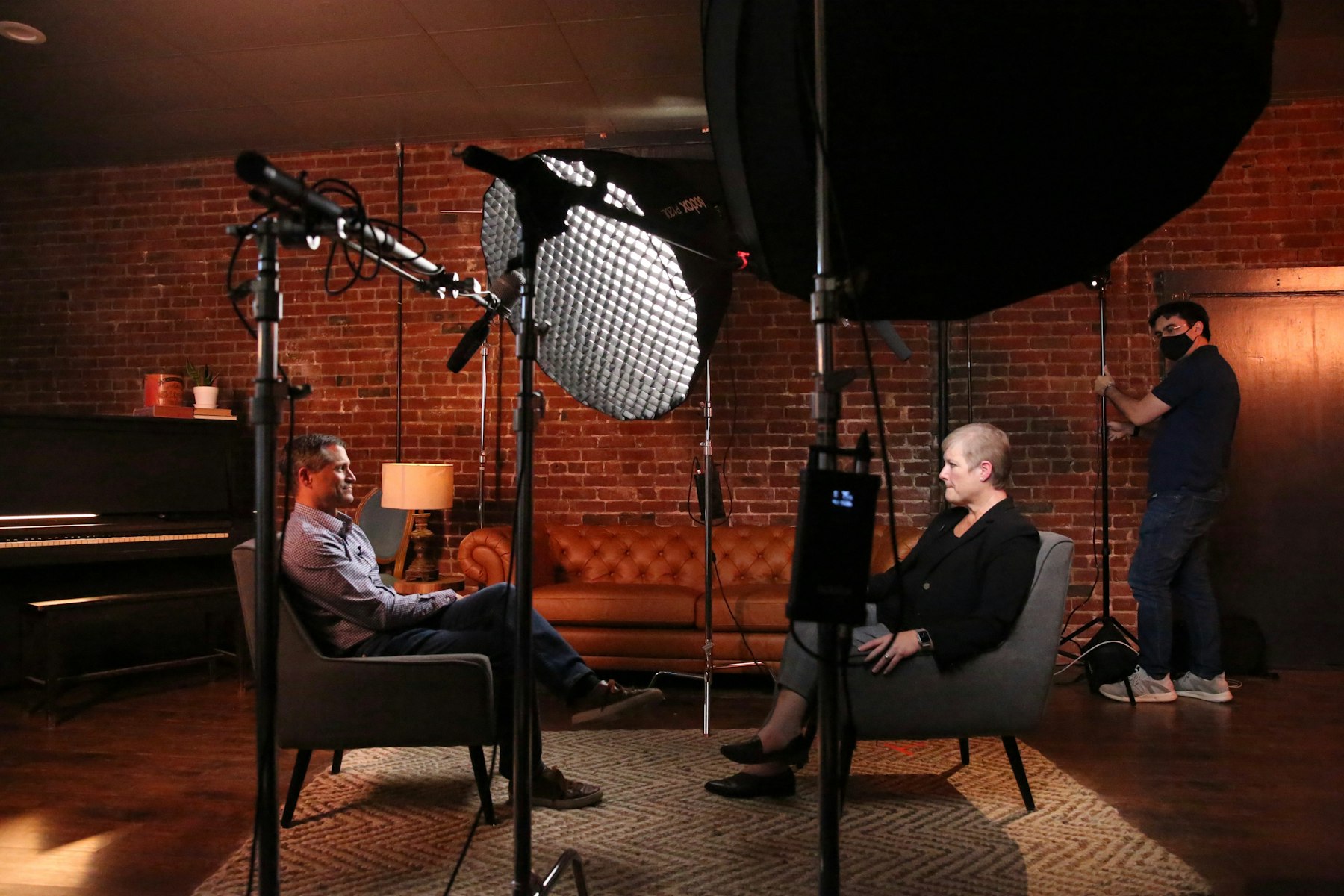
A practical guide to filming patient testimonials that build trust instead of sounding like a script.
A prospective patient will read your reviews, scan your website, and watch a few videos before they ever call your office. Somewhere in that research, a patient testimonial video usually shows up, and it carries more weight than almost anything else on the page.
Every practice claims to be experienced, gentle, and thorough. A patient saying it in their own words is different. They faced the same decision a viewer is facing now, and they came out the other side.
That advantage disappears the moment the patient sounds rehearsed. Generic praise and a stiff, camera-ready answer read as an ad, not a story. Viewers who sense that usually end up trusting the practice less, not more.
Fixing that doesn’t mean stripping away production value. It means choosing the right patient, asking questions built for a story instead of a compliment, filming in an environment that puts them at ease, and editing the conversation without changing what they said. Here’s how the strongest patient testimonial videos come together.
Table of Contents
- Authentic Doesn’t Mean Unproduced
- Choose the Right Patient, Not the Most Dramatic Result
- Find the Moment Their Perspective Changed
- Interview for a Story, Not a Compliment
- Prepare the Patient Without Writing Their Lines
- Build an Environment Where Patients Forget the Camera
- Use Supporting Footage to Back Up the Story
- Edit for Clarity, Then Protect the Trust You Built
- Turn One Interview Into a Content Library
Authentic Doesn’t Mean Unproduced
Some practices worry that professional production makes a testimonial feel staged. Production and authenticity actually solve two different problems.
Lighting lets a viewer see the patient’s face clearly. Clean audio keeps the story audible over a busy office. Editing removes dead air and repetition without touching a word the patient said. None of that requires changing what the patient means, only how clearly it comes through.
A patient can speak naturally while the finished video still reflects the quality of your practice. Small pauses, a laugh, an imperfect sentence: these details remind the viewer that a real person is talking, and they usually make a patient testimonial video stronger rather than weaker. Trouble starts when production begins directing the narrative instead of capturing it.
Choose the Right Patient, Not the Most Dramatic Result
The most persuasive testimonial participant isn’t always the patient with the most dramatic before-and-after.
A remarkable transformation grabs attention, but the person still has to describe it clearly on camera. Someone with a modest result and a specific, well-told story often outperforms someone with a dramatic case who freezes up in front of a lens.
Look for patients who remember what they were thinking before treatment: why they put off care, what made them nervous, why they picked your practice, which moment made them trust the decision. Those specifics give the story shape.
The patient should also represent the kind of experience your practice genuinely delivers. A testimonial shouldn’t imply every patient gets the same result, recovery, or reaction. It presents one person’s experience honestly.
Participation should be voluntary, and patients need to understand what’s being recorded, where the finished video might appear, and whether a shorter cut could end up on social media or in a paid ad.
Find the Moment Their Perspective Changed
A list of facts tells a viewer what happened. The moment a patient’s perspective changed tells them why it mattered.
Maybe they walked in afraid of implant surgery, embarrassed about the state of their teeth, or worried the dentist would judge them. Then something shifted: a team member explained the next step in plain language, the procedure went easier than they expected, or they saw the new smile for the first time.
Chase that moment directly. Instead of asking whether the team was compassionate, ask when the patient first felt comfortable. Instead of asking whether treatment worked, ask what they can do now that they couldn’t do before. Instead of requesting a recommendation, ask what they’d tell someone who has the same fear they had.
A specific memory sticks with a viewer in a way a generic compliment never does, because it gives them something concrete to picture.
A patient testimonial video built around a specific turning point instead of a generic compliment, the kind of detail a prospective patient can actually picture.
Interview for a Story, Not a Compliment
Weak testimonials usually start with weak questions. “Did you like the practice?” and “Would you recommend the dentist?” invite short, predictable answers that end up sounding like a review read aloud.
Move through the experience in order instead. Start with life before treatment: what the patient was dealing with, how it affected their comfort or confidence, what almost kept them from scheduling. Then explore the visit itself: what stood out, what surprised them, how the team explained things when they had questions. Finish with life after treatment: what changed, how they feel now, what they’d tell another nervous patient.
Listen for details and follow up on them. If a patient says “they made me comfortable,” ask what the team actually did. That second answer is usually where the real patient testimonial video begins.
Prepare the Patient Without Writing Their Lines
Patients should know what to expect before filming starts. Walking someone into a room with a camera and no context rarely produces a relaxed answer.
Explain the purpose of the interview, the general topics, who’ll be in the room, and roughly how long it’ll take. Ask them to think about life before treatment, one moment that stood out, and what’s changed since. That’s enough preparation for most patients.
Skip sending scripted answers to memorize. Even accurate wording changes a person’s pace and expression once they’re reciting it, and viewers tend to notice when someone is reaching for the next line even if they can’t say exactly what feels off. Let patients pause, restart, or skip a question. Removing the pressure to perform is usually what gets the best answer.
Build an Environment Where Patients Forget the Camera
A dental patient isn’t a professional spokesperson, and the room should help them forget they’re on camera at all.
Keep the space calm and the number of onlookers low. Put the interviewer close to the lens so the patient can hold eye contact with a person instead of a piece of glass. Open with easy questions before working into anything about treatment, anxiety, or appearance.
The interviewer matters as much as the gear. A patient often needs a few seconds to find the right words for an emotional memory, and jumping in to fill that silence can cut off the best answer before it arrives. Reminding the patient that any answer can be redone also tends to help them relax and speak more naturally.
Patients talk more naturally once they’ve stopped thinking about the camera, which is usually the difference between an average patient testimonial video and a genuinely convincing one.
Use Supporting Footage to Back Up the Story
A testimonial doesn’t need to hold on the patient’s face for its full length.
Footage of the patient arriving, talking with the dentist, or walking through the office gives a viewer somewhere else to look while reinforcing what’s being said. If the patient mentions feeling welcomed at check-in, show that greeting. If they mention technology that helped them understand treatment, show the technology in use.
Keep the footage tied to the actual story in the patient testimonial video itself. Polished b-roll with no connection to what the patient is describing looks nice and does nothing for credibility. Before-and-after photos can add useful context when they’re accurate and properly authorized, but they shouldn’t be framed as a guarantee for the next patient who watches.
Edit for Clarity, Then Protect the Trust You Built
A real interview usually runs far longer than the finished testimonial. Patients repeat themselves, answer out of order, and sometimes land on the best detail near the end. Editing organizes that material into something a viewer can follow: life before treatment, the experience itself, and what changed after.
Trim repetition, tighten pauses, clean up the audio, and add captions. Keep music subtle enough that it sets a tone without pushing the viewer toward an emotion the story hasn’t earned. Editing should organize the patient’s words, not rearrange them into a claim they didn’t make.
None of that replaces a proper consent process. Cover recording, treatment details, before-and-after material, and every place the content might run, including shorter cuts on social media or paid ads. The FTC’s endorsement guidelines are a useful starting point for what needs to be disclosed. A patient who’s comfortable appearing on your website might not want the same clip in a paid ad, and that boundary should be settled before you ever start editing, not after the video is live.
Turn One Interview Into a Content Library
A well-planned interview rarely produces just one video.
The full story can live on a testimonial page or a related treatment page. A shorter cut can support a landing page. Individual moments become vertical social clips, retargeting ads, or email content. A pull quote can support a graphic or a page of written copy, the same way we built out our own roundup of dental practice videos every website should have, with patient testimonials as one piece of a bigger library.
That approach keeps your patient’s voice consistent across every channel instead of asking the same person back every time you need a new promotional line. One thoughtful conversation, filmed once and treated carefully, ends up doing the work of several.
None of this happens by accident. The patient gets chosen with care, the questions are built for a story instead of a sales pitch, the room helps them relax, and the edit organizes their words without rewriting them. Get those pieces right, and a prospective patient doesn’t just hear that your practice is trustworthy. They watch someone else arrive at that same conclusion, in their own words. That’s what makes a patient testimonial video worth the time it takes to get right.
Ready to build a dental video library?
Gravity Dental Video creates professional dental video production and photography for individual practices, marketing agencies, dental groups, and DSOs. From patient testimonial videos and practice overviews to procedure content, social clips, and dental office photography, every production is planned around your goals, your patients, and your personality.
Speak with Gravity Dental Video about a customized video and photography package. Visit gravitydentalvideo.com